

The Power of Effective Business Decision Making
Effective business decision making is the cornerstone of any successful venture. It’s a repeatable, evidence-based process for choosing the best path forward to achieve your goals, manage resources, reduce risks, and drive growth. In a competitive market, making smart choices quickly is a genuine superpower.
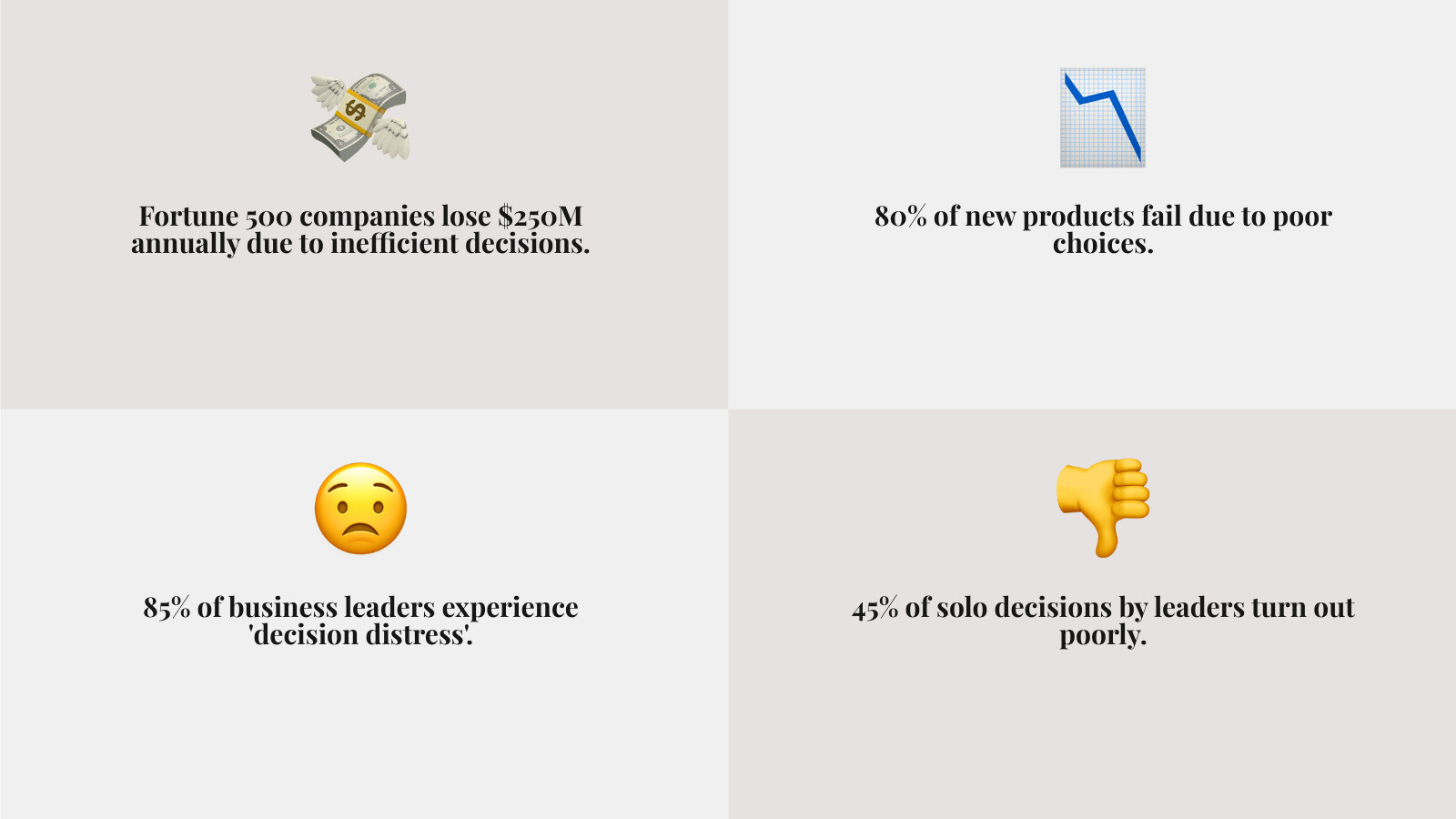
The stakes are high. Research shows decision effectiveness has a 95% correlation with financial performance. Yet, many leaders struggle; 85% report feeling “decision distress,” and poor choices are costly. Inefficient decision-making costs a typical Fortune 500 company $250 million annually and is a key reason why 80% of new products fail.
This guide will provide a clear framework to help you cut through the noise, avoid common pitfalls, and make smart, fast choices that propel your business forward.
Effective business decision making basics:
- business analysis using data for making effective decisions
- business strategy a guide to effective decision making
- effective and timely decisions in business intelligence
Why Mastering Decision-Making is a Business Superpower

Great companies move quickly and wisely. When founders face hundreds of choices each week, learning to decide well is a genuine competitive advantage. At The Entrepreneurs, we define effective business decision making as a repeatable, evidence-based approach that keeps every action aligned with long-term goals, directs resources where they matter most, spots risks early, and drives revenue.
Skipping a clear process invites trouble. Decision fatigue causes 42% of leaders to defer important calls, and famous brands like Kodak or Blockbuster paid dearly for slow or wrong turns. To avoid that fate, we’ll walk through a streamlined 7-step framework, common traps to dodge, and a short list of tech tools that sharpen your judgement. If you need a quick primer on the concept of decision-making itself, the overview on Wikipedia is a useful external reference.
Ready to add this super-power to your toolkit? Let’s dive in.
The 7-Step Framework for Effective Business Decision Making

To make consistently great decisions, follow this structured, seven-step process. It turns decision-making from a gamble into a reliable skill.
-
Clearly Identify the Problem: Before seeking a solution, define the real issue. Use techniques like the “Five Whys” to dig past symptoms to the root cause. Then, set a SMART (Specific, Measurable, Achievable, Relevant, Time-bound) objective for your decision.
-
Gather Relevant Information: Collect both quantitative data (metrics, financials) and qualitative insights (customer feedback, team opinions). Look at internal and external sources, but focus on what’s truly pertinent to avoid information overload.
-
Identify All Viable Alternatives: Don’t settle for the first idea. Brainstorm a wide range of potential solutions. Encourage diverse perspectives and creative thinking to ensure you’re not overlooking a better option.
-
Weigh the Evidence and Evaluate Risks: Analyze each alternative. Use a simple pros-and-cons list, a cost-benefit analysis, and consider both short-term and long-term consequences. For each serious option, identify potential risks and create a basic contingency plan.
-
Choose the Best Alternative: Select the option that best aligns with your strategic goals, company values, and the evidence. It’s not always the most profitable choice in the short term, but the one that best serves your long-term vision. Secure stakeholder buy-in for major decisions.
-
Take Action and Implement: A decision is only as good as its execution. Create a clear action plan, assign responsibilities (a RACI chart is great for this), set deadlines, and communicate the decision and the plan to everyone involved.
-
Review and Learn: After implementation, review the outcome. Did you achieve your objective? What lessons were learned? This feedback loop is crucial for improving your decision-making skills over time. Be ready to iterate if the results aren’t what you expected.
For a deeper dive, see our guide on Business Analysis: Using Data for Making Effective Decisions.
Overcoming the Hidden Obstacles to Great Decisions

Even the best process can be derailed by cognitive biases—mental shortcuts that lead to poor judgment. Being aware of these traps is the first step to avoiding them.
- Confirmation Bias: The tendency to seek out information that confirms what you already believe. To mitigate: Actively look for evidence that contradicts your initial view. Appoint a “devil’s advocate” in meetings.
- Anchoring: Giving too much weight to the first piece of information you receive. To mitigate: Get multiple data points and perspectives before discussing solutions or numbers.
- Sunk-Cost Fallacy: Continuing a failing project because of past investment. To mitigate: Base your decision only on future costs and benefits, not what you’ve already spent.
- Overconfidence & Groupthink: Overestimating your own abilities or conforming to a group consensus to avoid conflict. To mitigate: Encourage dissenting opinions and run a “pre-mortem” exercise, where you imagine the project has failed and identify why.
Also, avoid common execution errors like relying purely on gut feel, getting stuck in “analysis paralysis,” ignoring frontline input, or failing to communicate the final decision clearly.
Tools and Technologies to Sharpen Your Decision-Making
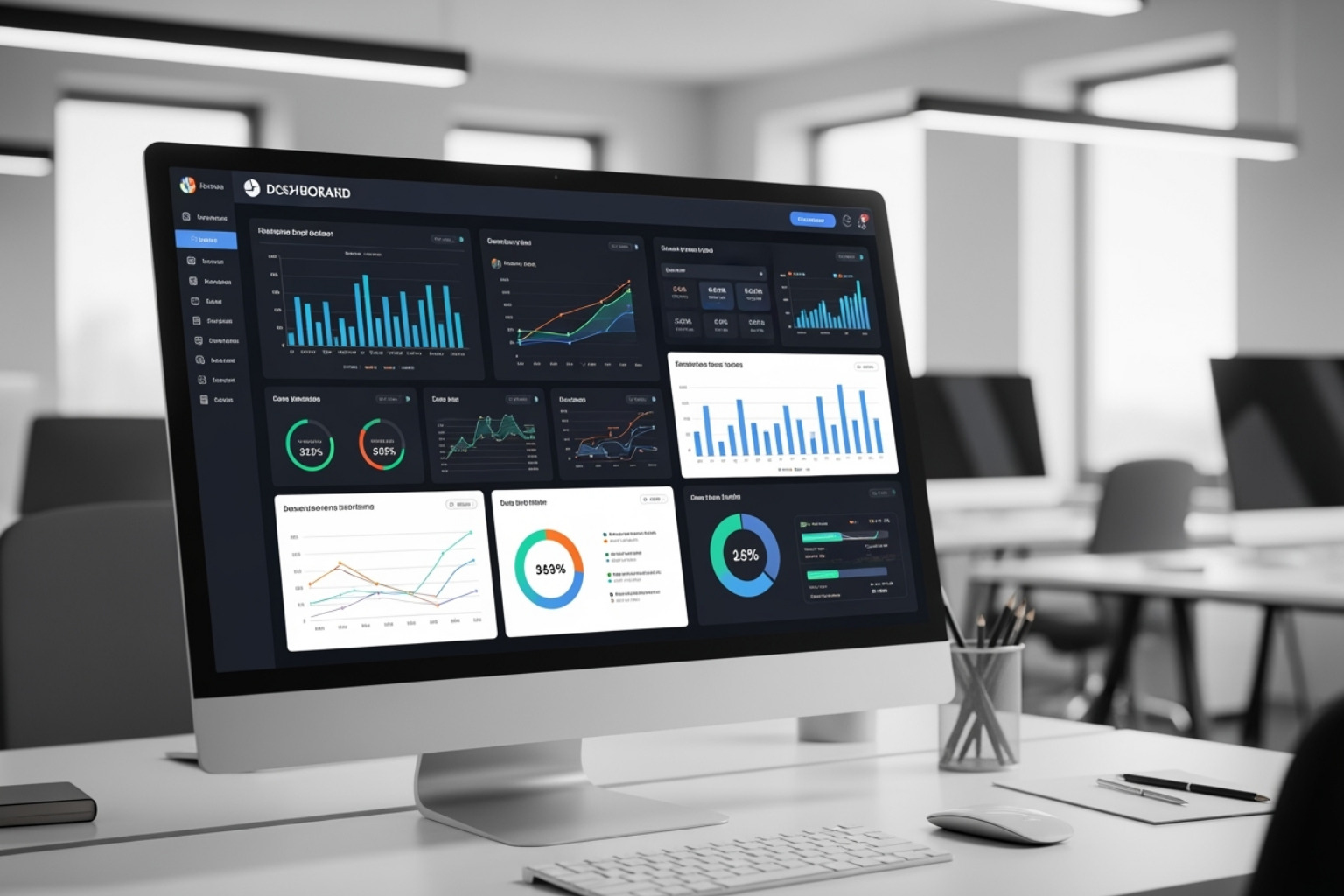
Leverage the right tools to bring structure and data into your decision-making process, replacing unstructured debate with clear analysis.
Helpful Frameworks:
- SWOT Analysis: A simple but powerful way to assess your Strengths, Weaknesses, Opportunities, and Threats before launching a new product or entering a new market.
- Decision Matrix: For comparing multiple options against several criteria. Assigning weights and scores helps you choose the most balanced option objectively.
- Pareto Analysis (80/20 Rule): Helps you prioritize by identifying the 20% of efforts that will yield 80% of the results.
- PESTLE Analysis: Scans the broader Political, Economic, Social, Technological, Legal, and Environmental factors that could impact long-range strategic decisions.
Essential Technologies:
- Business Intelligence (BI) Dashboards: Provide a real-time, visual snapshot of your key performance indicators (KPIs), enabling you to spot trends and issues instantly.
- Predictive Analytics / Machine Learning (ML): Use historical data to forecast future outcomes, like sales or customer churn, to inform your strategy.
- Automation: Delegate routine, rule-based decisions to software, freeing up human brainpower for complex, strategic work.
See how data platforms speed insight in our post on Effective and Timely Decisions in Business Intelligence.
The 7-Step Framework (Quick Reference)
Full details appear in Section 2. Keep this abbreviated checklist handy on your desk or Slack channel:
- Identify issue
- Gather data
- List options
- Compare & assess risk
- Decide
- Execute
- Review
Biases & Mistakes (Quick Reference)
This section condenses the key watch-outs already explained in Section 3. Print it out and revisit before major meetings.
- Confirmation bias
- Anchoring
- Sunk costs
- Overconfidence / groupthink
- Analysis paralysis
- Communication gaps
Handy Decision Tools (Quick Reference)
A two-minute reminder of Section 4:
- SWOT
- Decision Matrix
- Pareto
- PESTLE
- BI dashboards & basic ML forecasts
The 7-Step Framework for Effective Business Decision Making
Making truly great business decisions, quickly and confidently, might seem like a mysterious art. But guess what? It’s not! It’s a learnable skill, and with a reliable roadmap, you can master it. This 7-step framework gives you just that: a clear, structured approach that cuts through the confusion and helps you make choices based on solid ground, not just a fleeting gut feeling. Think of it as your personal guide to steering your business through complexity and uncertainty.
Here are the seven essential steps we recommend to lift your effective business decision making:
- Clearly Identify the Decision or Problem
- Gather Relevant Information and Data
- Identify All Viable Alternatives
- Weigh the Evidence and Evaluate Risks
- Choose the Best Alternative
- Take Action and Implement Your Decision
- Review Your Decision and Its Consequences
Ready? Let’s dive into each one.
Step 1: Clearly Identify the Decision or Problem
This first step is arguably the most important one. To get to the heart of the matter, avoid getting sidetracked by symptoms. Instead, try the “Five Whys” method to dig deeper and find the root cause. For example, if you’re seeing lots of product defects, asking “why” repeatedly might lead you from a manufacturing error to an understaffed maintenance team due to budget cuts. Once the problem is clear, set a SMART (Specific, Measurable, Achievable, Relevant, and Time-bound) objective. This clarity will light the way for your entire decision-making journey.
To avoid common pitfalls in your entrepreneurial journey, check out our insights on Top 5 Mistakes New Entrepreneurs Make and How to Avoid Them.
Step 2: Gather Relevant Information and Data
When it comes to effective business decision making, information is your best friend. This step means collecting both quantitative data (think numbers, sales figures, metrics) and qualitative feedback (like customer surveys or employee interviews). Don’t just look inward; explore external sources too, such as market research and competitor analysis. However, beware of information overload. Your goal is to gather pertinent information, not all information.
For more on using the power of data, explore Business Analysis: Using Data for Making Effective Decisions.
Step 3: Identify All Viable Alternatives
Now, it’s time to brainstorm solutions. The trick here is not to settle for the first idea that pops into your head. Instead, really challenge yourself and your team to imagine and construct new alternatives. Encourage a wide variety of opinions and foster a culture where it’s okay to disagree. The more viable alternatives you generate, the better your chances of finding that truly optimal path forward.
Step 4: Weigh the Evidence and Evaluate Risks
With your list of alternatives in hand, it’s time to play judge. Start with a pros and cons list for each alternative, then dig deeper with a cost-benefit analysis. Always consider the short-term versus long-term impact. Next, assess potential risks—whether they’re legal, operational, financial, or reputational. Finally, for your top contenders, create contingency plans. What’s your backup if things don’t go as planned?
Step 5: Choose the Best Alternative
After careful evaluation, it’s time to make the call. Select the option that best aligns with your company’s core values, mission, and strategic goals. This isn’t just about picking the most profitable path; it’s about making a choice that truly serves your organization’s purpose. For big decisions, try to gain consensus from key stakeholders to ensure everyone is invested in the outcome.
Step 6: Take Action and Implement Your Decision
A decision is useless if it just sits on paper. First, create a clear action plan with concrete steps. Then, assign responsibilities—tools like the RACI Matrix (Responsible, Accountable, Consulted, Informed) can be incredibly helpful here. Next, set a timeline with clear deadlines. Most importantly, communicate the decision clearly to everyone who will be impacted.
Ready to put your plans into action? Our guide on The Ultimate Beginner’s Guide to Starting Your Own Business can help.
Step 7: Review Your Decision and Its Consequences
The decision-making journey doesn’t end with implementation. To truly master effective business-making, you must learn from every experience. Measure outcomes against goals, gather feedback, and identify lessons learned. Document your findings from both your successes and your failures. This feedback loop is essential for continuous improvement and helps you make even smarter choices in the future. Be prepared to iterate if your decision hasn’t fully met the need.
Overcoming the Hidden Obstacles to Great Decisions
Even with a solid framework, the path to effective business decision making isn’t always smooth. We all have hidden obstacles in our minds and our organizations that can trip us up. These include common cognitive biases, tricky group dynamics, and psychological traps. The good news? Once we recognize them, we can proactively mitigate their impact.
Recognizing and Mitigating Common Cognitive Biases
Our brains often take shortcuts, leading to predictable judgment errors called “cognitive biases.” We need to be aware of these biases and actively work to counter them.
Here are a few common culprits:
- Confirmation Bias: This is our tendency to seek out information that confirms our existing beliefs, while ignoring contradictory evidence.
- Mitigation: Actively search for disconfirming evidence. Assign someone to play “Devil’s Advocate” to argue against a potential decision.
- Anchoring Bias: We tend to rely too heavily on the first piece of information offered (the “anchor”) when making decisions.
- Mitigation: Consider multiple perspectives and gather comprehensive data before hearing initial proposals.
- Sunk-Cost Fallacy: We continue to invest in a failing project because we’ve already invested so much time or money, even if it’s no longer rational.
- Mitigation: Base your choice on future payoff only, not past investment. Ask, “Why should we continue this project?” not “Why should we stop?”
- Overconfidence Bias: An inflated belief in our own abilities or the accuracy of our judgments.
- Mitigation: Conduct “pre-mortems” where you imagine the decision has failed and work backward to identify potential causes.
- Groupthink: The desire for harmony in a group results in an irrational decision-making outcome.
- Mitigation: Encourage a diversity of opinions and foster a culture where dissent is welcomed. Ensure anonymous feedback channels are available.
Avoiding Common Decision-Making Mistakes
Beyond biases, several common mistakes can hinder effective business decision making:
- Relying on Gut Feeling Alone: Intuition has its place, but it should be a partner to data, not a substitute.
- Insufficient Data: Making decisions based on incomplete or inaccurate information is a recipe for disaster.
- Analysis Paralysis: Getting bogged down in too much information, leading to no action. Inaction is often worse than making the wrong decision.
- Failing to Involve Stakeholders: Not soliciting feedback from those who will be impacted can lead to poor choices and lack of buy-in.
- Poor Communication: Even the best decision can fail if it’s not communicated clearly to everyone involved.
- Attacking the Wrong Problem: Solving symptoms instead of root causes is a common and costly mistake.
Tools and Technologies to Sharpen Your Decision-Making
In our quest for effective business decision making, we don’t have to rely solely on our brains. There’s a rich ecosystem of tools and technologies designed to sharpen our decision-making processes, from simple frameworks to sophisticated AI-powered systems. These tools help us organize information, visualize data, and make more objective choices.
To dive deeper into how data can empower your choices, check out Effective and Timely Decisions in Business Intelligence.
Deploying a Framework for Effective Business Decision Making
Frameworks provide a structured, systematic approach for evaluating options and reducing bias. Here are a few popular frameworks and tools:
| Framework/Tool | Description – SWOT Analysis: A classic for a reason. It helps you assess your Strengths, Weaknesses, Opportunities, and Threats, providing a 360-degree view of a strategic decision, like a new product launch.
- Decision Matrix: When you have multiple options with various criteria (e.g., cost, features, ease of use), a decision matrix allows you to score each option against weighted criteria for an objective comparison.
- Cost-Benefit Analysis (CBA): This framework helps you quantify the financial implications of a decision by comparing the total expected costs against the total expected benefits. It’s essential for major investment decisions.
- Pareto Analysis (80/20 Rule): This helps you prioritize by identifying the 20% of causes that are responsible for 80% of the problems (or results). It focuses your effort where it will have the most impact.
Technology for Better Decisions
Modern technology can boost your decision-making capabilities:
- Business Intelligence (BI) Dashboards: These tools consolidate key metrics into real-time, visual dashboards, allowing you to see what’s happening in your business at a glance and spot trends or problems quickly.
- Predictive Analytics & Machine Learning (ML): By analyzing historical data, these technologies can forecast future outcomes, such as customer churn or sales trends, giving you a powerful strategic advantage.
- Automation: For routine, rules-based decisions, automation can handle the task efficiently and without error, freeing up your team to focus on more complex, high-value challenges.
Frequently Asked Questions about Business Decision-Making
How does decision-making differ across roles?
- C-suite: Sets long-term direction (strategic).
- Middle managers: Translate strategy into plans (tactical).
- Frontline teams: Keep daily operations humming (operational).
Pushing smaller calls downwards frees leaders for the high-stakes bets.
What are the three main types of business decisions?
- Strategic: High risk, long horizon (e.g., entering a new country).
- Tactical: Medium scope, supports strategy (e.g., channel mix for marketing).
- Operational: Routine, reversible (e.g., scheduling staff).
How can I decide faster without losing quality?
Prioritise, delegate, use a repeatable framework, set firm deadlines, and remember that “good today” often beats “perfect next month”. Tools like a Decision Matrix or a simple RACI chart cut meeting time dramatically.
Conclusion
Mastering effective business decision making is less about genius instinct and more about discipline: a clear process, reliable data, and awareness of bias. Follow the 7-step roadmap, leverage lightweight tools, and keep learning from each outcome. Do that and your startup will move faster, waste less, and seize more opportunities than competitors still relying on hunches.
Need more actionable guidance? Check our growing library of how-to articles and start building your successful business today.